


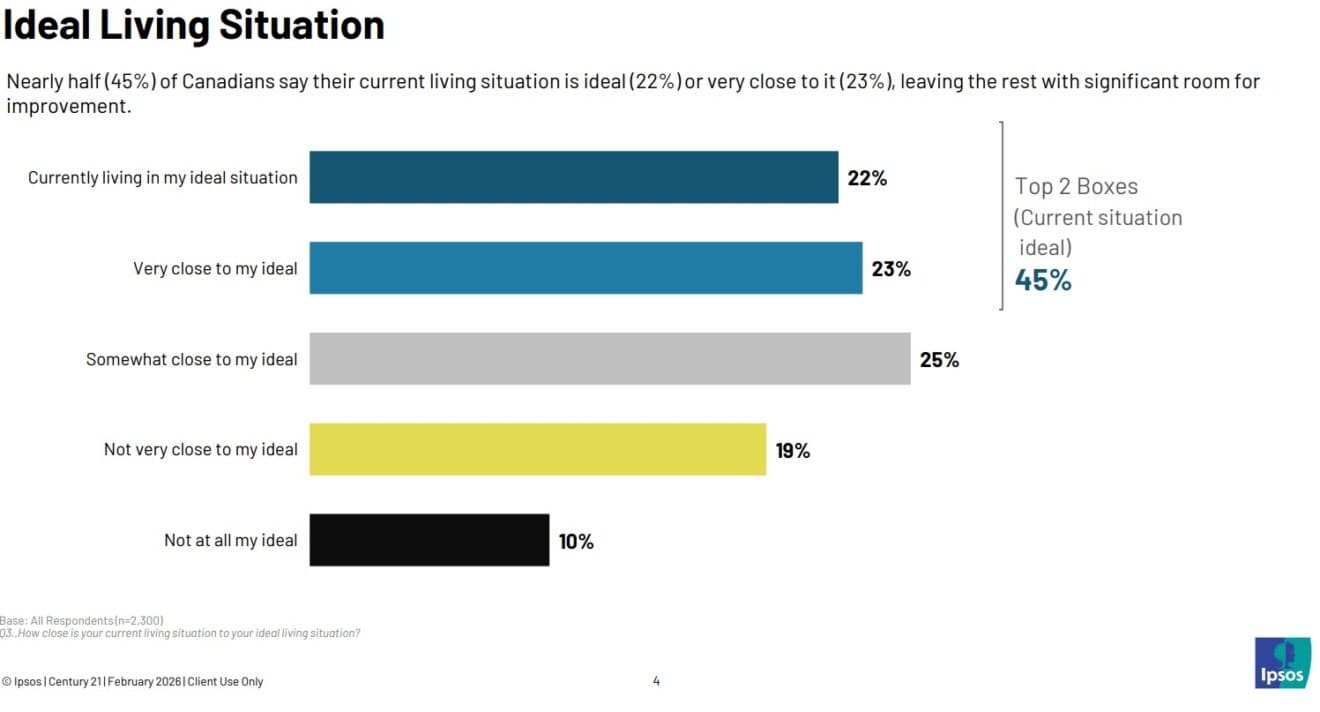
The Canada housing gap in 2026 is becoming more visible, as a recent survey 55% of Canadians say they are not living in their ideal home (according to a recent national housing report)
This highlights what is now being referred to as the “Canadian housing gap”—the growing disconnect between what people want and what they can realistically afford in today’s market.
What Canadians Actually Want
According to the report, most Canadians share a similar vision of their ideal home:
- A detached house
- Around 2,000+ sq ft of space
- Three bedrooms
- Outdoor space, such as a backyard
In fact, 63% of respondents said they want more space than what they currently have.
- This reflects a strong preference for comfort, flexibility, and long-term living needs.
The Reality: Affordability Remains the Biggest Barrier
Despite these preferences, affordability remains the main obstacle.
- 59% of Canadians say cost is the biggest reason they are not in their ideal home
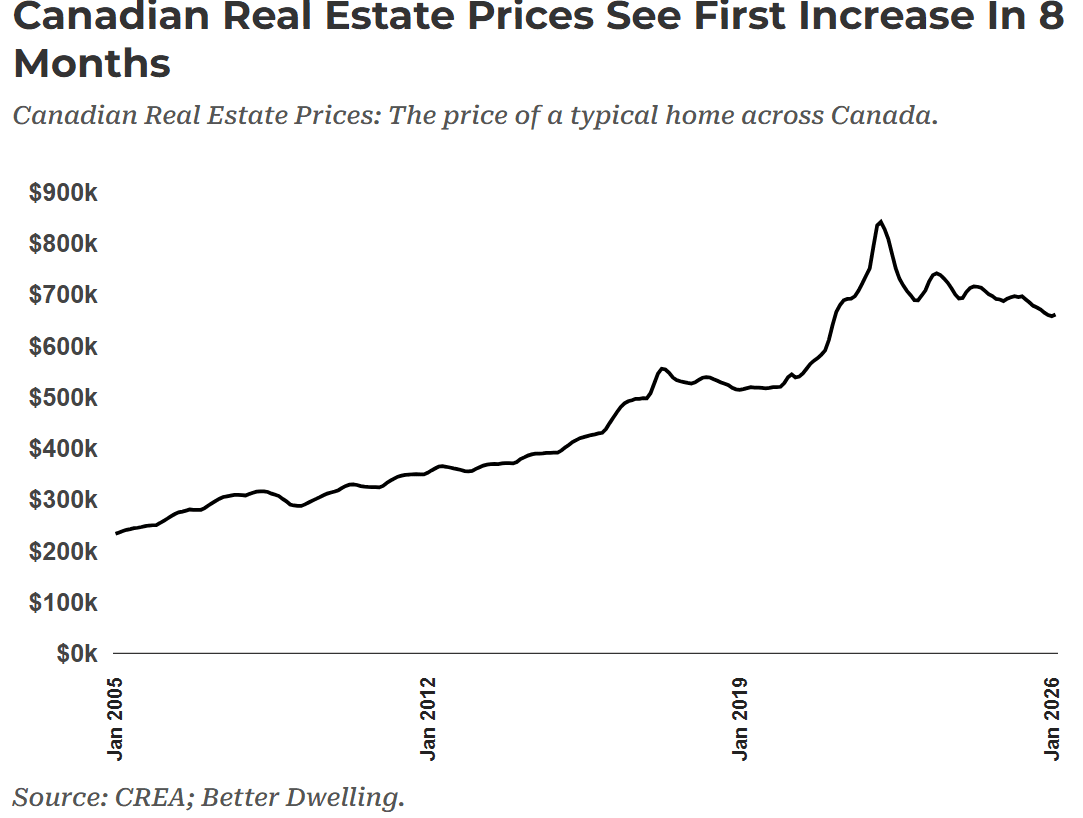
High home prices, elevated mortgage rates, and cost-of-living pressures are preventing many buyers from upgrading or entering the market.
A Clear Divide: Homeowners vs Renters
The report also highlights a noticeable difference in satisfaction levels:
- Approximately 80% of homeowners are satisfied with their current home
- Only about 50% of renters feel the same
This gap reinforces the long-term value of homeownership for many Canadians.
However, due to affordability challenges, many are staying in rental housing longer than planned.
What This Means for Buyers in 2026
For buyers, the housing gap reflects a shifting market dynamic:
Opportunities
- More inventory compared to previous years
- Less competition in certain segments
- More time to evaluate options
Challenges
- Affordability constraints remain
- Interest rate uncertainty
- Need for careful financial planning
In today’s market, buying decisions are becoming more strategic rather than emotional.
What This Means for Investors
For real estate investors, this trend also provides insight into market demand:
There is strong demand for:
- Larger living spaces
- Functional layouts
- Long-term livability
At the same time:
- Budget constraints limit what many renters can afford
- Market conditions require more thoughtful investment strategies
The Market Is Evolving
The Canadian housing market in 2026 is not defined by rapid growth but rather by transition:
- From fast-paced buying → to more cautious decision-making
- From limited supply → to more balanced inventory
- From urgency → to evaluation
This shift is shaping how both buyers and investors approach real estate.
Final Thoughts
The Canada housing gap is not just a statistic—it reflects a broader reality:
- People know what they want
- But market conditions are shaping what is possible
In this environment, understanding market trends and making informed decisions has never been more important.
Explore current opportunities in the market

Your Industry Experts
We’re here to help. Whether you’re an agent or a client, we have the support and expertise you need to thrive in your next endeavour.