
If you only read the headlines, the GTA housing market can sound contradictory. It has thousands of unsold condos.
On one side:
Thousands of newly completed condos are sitting unsold.
Condo prices have fallen.
Developers are offering incentives.
Pre-construction sales remain extremely weak.
Some bulk buyers are even purchasing blocks of completed units at significant discounts.
But on the other side:
CMHC continues to say Toronto needs substantially more housing construction to improve long-term affordability.
So which one is true?
Do we have too many homes—or not enough?
The answer is:
Both can be true at the same time.
The GTA currently has a large amount of certain housing available at prices that today’s buyers are hesitant or unable to pay.
At the same time, construction of future ownership housing has fallen so sharply that Toronto could find itself facing another supply problem several years from now.
And there is another important issue:
Not every type of housing serves the same buyer.
A completed one-bedroom condo downtown, a three-bedroom family condo, a Richmond Hill townhouse and a purpose-built rental apartment may all technically count as “housing.”
But they solve completely different housing needs.
That distinction is becoming increasingly important in today’s GTA market.
First, Yes—The GTA Really Does Have Thousands of Unsold Condos
Urbanation’s latest condominium market report, released October 19, shows that the Greater Toronto Hamilton Area had:
5,127 completed and unsold condos units at the end of Q3 2026.
That number was down 7% from the record level reached in the previous quarter, which suggests some of the standing inventory has started to move.
But it was still:
40% higher than one year earlier
and approximately:
four times the level recorded two years ago.
So the oversupply issue is real.
This is not simply a perception created by negative headlines.
There are thousands of finished new condos for which developers are still looking for buyers.
But there is another side to those numbers.
Condo Sales Are Improving—But From an Extremely Low Level
Urbanation reported 760 new condo sales in the GTHA in Q3 2026, double the number from the same quarter a year earlier.
At first glance, that sounds like a major recovery.
But context matters.
Those sales were still:
78% below the latest 10-year Q3 average.
And almost half of the sales came from bulk purchases.
Investment groups bought 339 units in bulk transactions, representing 45% of all new condo sales during the quarter. Meanwhile, only 60 pre-construction units sold, down 61% from a year earlier.
So today’s market is not simply returning to the pre-construction environment buyers saw several years ago.
Instead, much of the activity is happening in:
already completed inventory
where buyers can see the finished product and developers may be more motivated to negotiate.
That is a very different market.
If There Are Thousands of Unsold Condos, Why Does Toronto Need More Housing?
This is the part that sounds strange.
If developers cannot sell what they already built, shouldn’t Toronto simply stop building until the existing inventory disappears?
In the very short term, that logic makes sense.
Developers are already responding by delaying or changeling projects.
But housing construction does not work like ordering more products for a store.
A high-rise condo can take:
years
to move from planning to sales to financing to construction and finally completion.
So when developers stop launching and building projects today, the biggest effect may not be visible until:
2028, 2029 or even later.
That is why today’s excess inventory can eventually turn into tomorrow’s shortage.
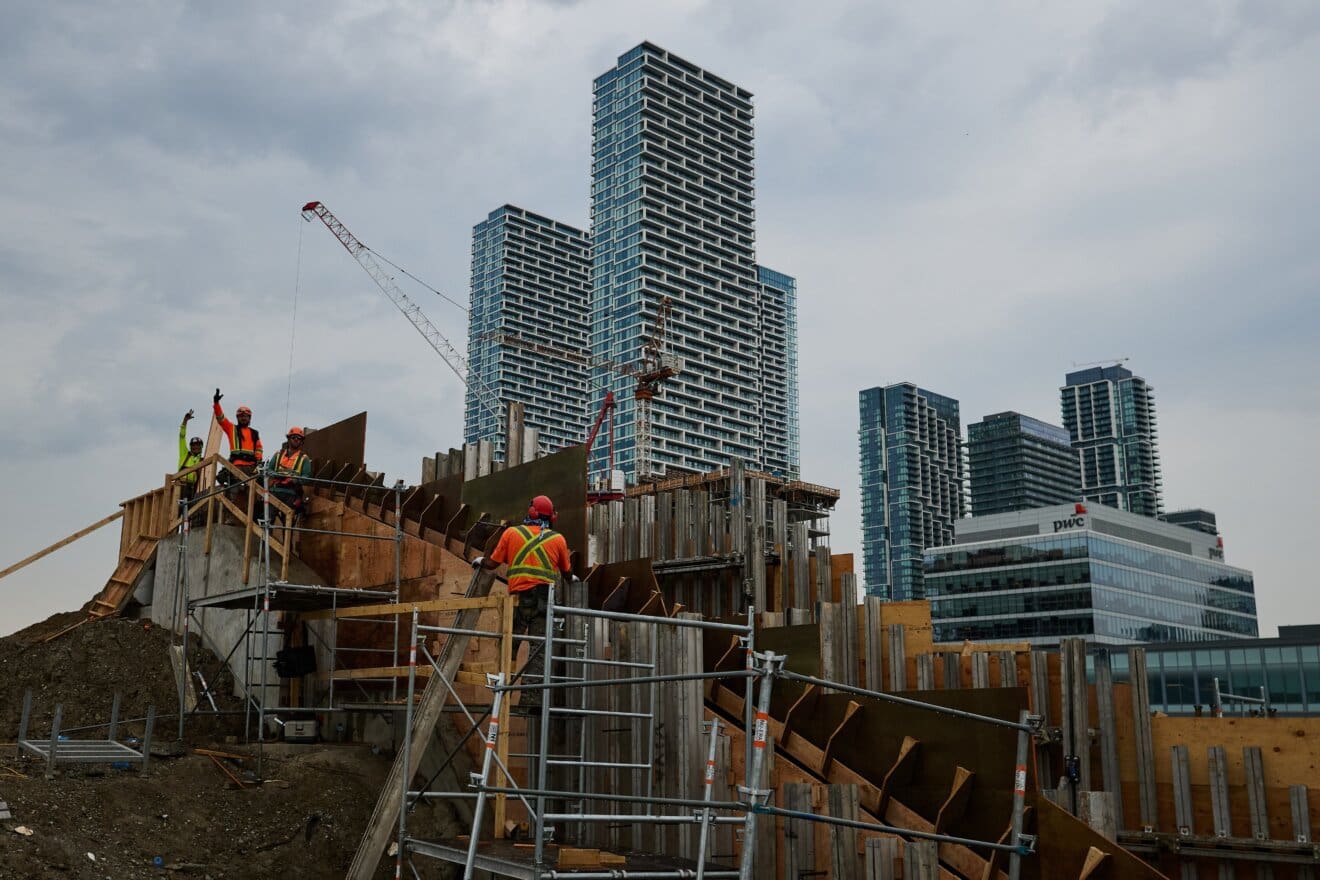
New Condo Construction Has Collapsed
This is probably the most important number in the entire story.
Urbanation reported that only:
381 condominium units
started construction across the GTHA in Q3 2026.
All 381 were in a single project.
During the first nine months of 2026, total new condo starts reached just:
2,696 units
which was:
82% below the 10-year average for the same period.
The amount of condo inventory currently under construction is also shrinking quickly.
At the end of Q3:
35,920 condo units were under construction across the GTHA.
That was:
- 38% lower than a year earlier
- the lowest level since early 2012
- 66% below the 2023 peak of 104,796 units
So while buyers today can see plenty of finished inventory, the pipeline behind that inventory is rapidly getting smaller.
The Drop Becomes Even Clearer When You Look at Future Completions
Urbanation currently expects GTHA condo completions to decline from approximately:
20,868 units in 2026
to:
15,825 in 2027
then:
12,065 in 2028
and only:
4,213 in 2029.
That is an enormous change.
The GTA is currently working through condos that were sold and started during stronger market years.
But relatively few new projects are replacing them.
Think of it like a pipeline.
At the front of the pipeline today:
there are plenty of completed condos.
But at the back:
almost nothing new is entering.
That is why simply looking at today’s inventory does not tell you what the market will look like three years from now.
CMHC Is Warning About the Same Problem
CMHC’s Fall 2026 Housing Supply Report makes a similar point.
According to CMHC, Toronto still needs to increase annual housing starts by at least:
50% over the next decade
to restore affordability to approximately 2019 levels.
CMHC estimates Toronto needs roughly:
21,000 to 26,000 additional housing starts every year
to sustainably close the affordability gap.
But construction is currently moving in the opposite direction.
In the City of Toronto, only:
156 condominium units
started construction during the first half of 2026.
For comparison, the previous decade averaged roughly:
7,000 condo starts per year.
That is why CMHC’s concern is not:
“There aren’t enough condos listed for sale today.”
Its concern is:
“We are not building enough housing for the future.”
Those are two completely different questions.
We May Have Too Much of One Product—and Not Enough of Another
This is another reason the headlines can be misleading.
When someone says:
“Toronto has too many condos.”
What exactly do they mean?
Too many:
500-square-foot one-bedroom units?
Too many $1,100-per-square-foot new condos?
Too many investor-oriented units?
Too many downtown apartments?
Too many condos for today’s interest-rate environment?
That does not necessarily mean there are too many:
- family-sized homes;
- affordable ownership options;
- townhouses;
- larger two- and three-bedroom condos;
- affordable rental units;
- homes near schools;
- ground-oriented housing.
This is why the phrase:
“housing supply”
can sometimes hide more than it explains.
A Family Looking for Three Bedrooms Doesn’t Benefit From Every Unsold Condo
Imagine a family with two children.
Their budget is:
$900,000
They want:
- three bedrooms;
- good schools;
- reasonable commuting access;
- enough space to stay for several years.
Now imagine Toronto has thousands of unsold condos.
That sounds like great news.
But what if many of the units available in their budget are:
one-bedroom;
small two-bedroom;
or located in areas that do not fit the family’s needs?
Technically:
there is inventory.
Practically:
there may still be very little suitable inventory for that buyer.
This is exactly why housing cannot be discussed as if every unit is interchangeable.
The Condo Market Was Built Around Investors for Years
For a long time, the GTA pre-construction model depended heavily on investors.
Small units made sense because:
they were easier to afford as investments;
required smaller deposits in absolute dollars;
could often be rented;
and historically benefited from rising prices.
That helped developers finance large projects through pre-sales.
But that model became much harder when:
- borrowing costs increased;
- condo prices stopped rising rapidly;
- rents no longer covered carrying costs in many cases;
- construction costs increased;
- and investors became much more cautious.
The result was not just fewer buyers.
It affected:
whether new projects could get built at all.
High-rise condominium projects usually require substantial pre-sales before lenders will advance construction financing.
If investors stop buying pre-construction units:
developers cannot simply keep building thousands of units and hope someone buys them four years later.
So weak investor demand today can translate into:
much less ownership housing several years from now.
But That Doesn’t Mean the Old Investor Model Should Simply Return
There is also a bigger question:
Should Toronto solve the housing shortage by going back to building exactly the same type of product?
Not necessarily.
Build Canada Homes CEO Ana Bailão recently argued that Canada still needs more housing despite today’s weak market and unsold condos inventory — but emphasized the need for the right kind of housing, including more purpose-built rental apartments and less dependence on investment-driven condos.
That distinction matters.
The goal cannot simply be:
build the largest possible number of units.
It should also involve asking:
Who are we building them for?
Purpose-Built Rental Construction Is Moving in the Opposite Direction
Interestingly, while condo construction has collapsed, rental construction has been much stronger.
CMHC reported that purpose-built rental apartment starts in Toronto increased:
82% in the first half of 2026 compared with 2025.
Rental apartments were the only major housing segment to record growth during that period, and rental starts surpassed condominium apartment starts for the first time in decades.
That is helping create more rental supply.
But CMHC also warns that it does not completely solve the problem.
Why?
Because condos have historically played two roles:
ownership housing
and
rental housing.
A large number of investor-owned condos eventually enter the secondary rental market.
If condo construction falls dramatically, the GTA does not only lose future ownership supply.
It may eventually lose some future rental supply as well.
So Is Today’s Condo Market Actually a Buying Opportunity?
For some buyers:
possibly.
But the answer should not simply be:
“Condos are down, so buy now.”
Today’s market gives buyers something they did not always have during the stronger years:
choice.
A buyer might now be able to compare:
Option A
A completed new condo where the developer is motivated to sell.
Option B
A resale condo in the same neighbourhood.
Option C
An older building with a larger floor plan.
Option D
A townhouse farther outside Toronto.
Option E
Continue renting and wait.
The question is not:
“Will condo prices go up again?”
Nobody can guarantee that.
The more useful question is:
“At today’s prices, which option gives me the best home for my actual needs?”
New-Construction Buyers May Have More Negotiating Power Than Before
Another unusual feature of today’s market is the gap between asking prices and actual transaction prices.
Urbanation reported that completed and unsold condos were asking an average of:
$1,157 per square foot
in Q3.
But regular new-condo transactions during the quarter averaged approximately:
$1,045 per square foot
excluding luxury and bulk transactions.
Bulk purchasers paid an average of only:
$763 per square foot, representing an average discount of about 40% from the original selling prices in those buildings.
A regular individual buyer should not assume they can receive the same pricing as an institutional buyer purchasing dozens of units at once.
But the numbers show something important:
asking price and actual market-clearing price are not always the same thing.
That is why buyers should compare:
- incentives;
- price reductions;
- closing costs;
- maintenance fees;
- parking;
- occupancy status;
- nearby resale prices;
- and the developer’s actual motivation.
Do not evaluate a condo only based on the original price list.
What About Resale Condos?
The resale market has also softened, but the picture is not identical everywhere.
Urbanation reported that GTHA resale condo sales declined 6% year-over-year in Q3, while active listings fell 11%.
Average resale prices declined:
5.7% year-over-year to $724 per square foot.
But performance varied significantly by location.
In the former City of Toronto, average resale condo prices were down only 2.8%, compared with larger declines of 7.9% in the outer 416 and 9.3% in the 905.
That is another reminder:
There is no single:
“GTA condo market.”
Downtown Toronto.
North York.
Scarborough.
Vaughan.
Markham.
Mississauga.
They can move very differently.
Investors Need to Think Differently Too
For investors, the lesson from this market should not be:
“Condos never work anymore.”
Nor should it be:
“They’re discounted, so buy anything.”
The better approach is to calculate the investment based on today’s numbers.
For example:
- Purchase price.
- Down payment.
- Mortgage payment.
- Maintenance fees.
- Property tax.
- Insurance.
- Expected rent.
- Vacancy risk.
- Closing costs.
- Potential repairs.
- Future resale competition.
If the investment only works because you assume:
“The price will definitely rise 10% before closing,”
then the investment thesis is heavily dependent on speculation.
Today’s market has shown why that can be dangerous.
Could We Go From Too Much Supply to Too Little Supply?
Yes.
That is probably the biggest takeaway from the current data.
Today, the market is working through a large amount of completed inventory.
But construction starts are extremely weak.
Completions are already expected to decline significantly through 2029.
CMHC’s warning is essentially this:
If Toronto underbuilds too much during a weak market, the supply problem may return once demand strengthens.
CMHC Deputy Chief Economist Aled ab Iorwerth described the risk as new construction slowing faster than demand, potentially leaving Canada even shorter of housing when demand eventually improves.
That does not mean:
prices must rise.
It does not mean:
buyers should rush.
And it certainly does not guarantee:
today’s condo will be worth more in three years.
It simply means:
today’s excess inventory should not be mistaken for permanent oversupply.
What Does This Mean for a Buyer Today?
If you’re buying a condo in the GTA right now, don’t base the decision only on macro headlines.
Instead, narrow the question.
Ask:
How much inventory exists in this exact building or neighbourhood?
Twenty unsold units in one building matters more to you than thousands of units scattered across the GTA.
How does the price compare with resale?
A “discounted” new condo may still cost substantially more per square foot than a comparable resale unit.
Who is the likely buyer when you eventually sell?
- First-time buyer?
- Investor?
- Downsizer?
- Family?
That affects how deep the future buyer pool may be.
Does the layout actually work?
A slightly larger, functional unit may have very different long-term appeal from a poorly designed unit with the same bedroom count.
What are the carrying costs?
Maintenance fees, property taxes and financing can matter just as much as the purchase price.
JDL Realty Perspective
The GTA can have:
thousands of unsold condos today
and still face:
a housing shortage tomorrow.
Those ideas are not contradictory.
Today’s problem is partly about:
affordability + buyer confidence + product mismatch + financing.
Tomorrow’s problem may be:
not enough new ownership housing entering the pipeline.
And underneath both issues is something even more important:
housing is not one single product.
A 450-square-foot investor condo.
A two-bedroom downtown unit.
A three-bedroom Markham townhome.
A Richmond Hill detached house.
A purpose-built rental apartment.
They all serve different people.
So when buyers hear:
“There is too much supply.”
the next question should be:
“Too much supply of what?”
And when they hear:
“Toronto needs more housing.”
they should ask:
“What type of housing is actually missing?”
That is a much more useful way to look at the market.
Frequently Asked Questions
How many completed unsold condos are currently in the GTA?
Urbanation reported 5,127 completed and unsold condo units across the GTHA at the end of Q3 2026. That was down 7% quarter-over-quarter but still 40% higher than a year earlier.
Are GTA condo sales recovering?
New condo sales improved in Q3, reaching 760 units — twice the year-earlier level. However, sales remained 78% below the 10-year Q3 average, and bulk investment purchases represented 45% of sales.
Is pre-construction recovering?
Not yet in any meaningful way. Urbanation reported just 60 pre-construction condo sales in Q3, down 61% year-over-year.
Why does CMHC say Toronto still needs more housing?
CMHC estimates Toronto needs annual housing starts to increase by at least 50% over the coming decade to return affordability toward 2019 levels. It says the current slowdown reflects weak market conditions rather than a permanent solution to the housing shortage.
Are developers still building condos?
Very few compared with historical levels. GTHA condo starts totalled only 2,696 units in the first nine months of 2026, 82% below the 10-year average for the same period.
Does high inventory mean condo prices will keep falling?
Not necessarily. Inventory, interest rates, buyer confidence, employment, population growth, future construction, rents and local conditions can all affect prices. High inventory can give buyers negotiating power today, but it does not guarantee a particular future price direction.
The Bottom Line
Right now, the GTA condo market has an unusual problem.
At the front end:
there are thousands of completed units looking for buyers.
At the back end:
new construction has nearly stopped.
That means today’s market can feel oversupplied while the future development pipeline is becoming increasingly thin.
For buyers, the lesson is not:
“Buy now because supply will disappear.”
And it is not:
“Never buy a condo because there are too many.”
The better approach is much more specific:
- What can your budget buy today?
- How much competing inventory exists in the area you actually want?
- Does a new condo make more sense than resale?
- Would a townhouse or another property type give you better value?
- And does the home actually fit your needs?
Because the GTA does not simply have:
too many homes
or:
too few homes.
The bigger issue is whether we have:
the right housing, in the right places, at prices people can actually afford.
Looking for a Home or Condo in the GTA?
If you are considering Toronto, Markham, Richmond Hill, Vaughan, Mississauga or elsewhere in the GTA, tell JDL Realty:
Budget + preferred area + property type
We can help you compare:
- Current resale listings
- Completed new-construction inventory
- Recent sold prices
- Price per square foot
- Maintenance fees
- New-build incentives
- Nearby alternatives
- Condo vs. townhouse options
- Whether today’s inventory actually gives you negotiating room
Because a headline saying:
“There are thousands of condos available”
doesn’t tell you whether there are many good options:
for you.

Your Industry Experts
We’re here to help. Whether you’re an agent or a client, we have the support and expertise you need to thrive in your next endeavour.