


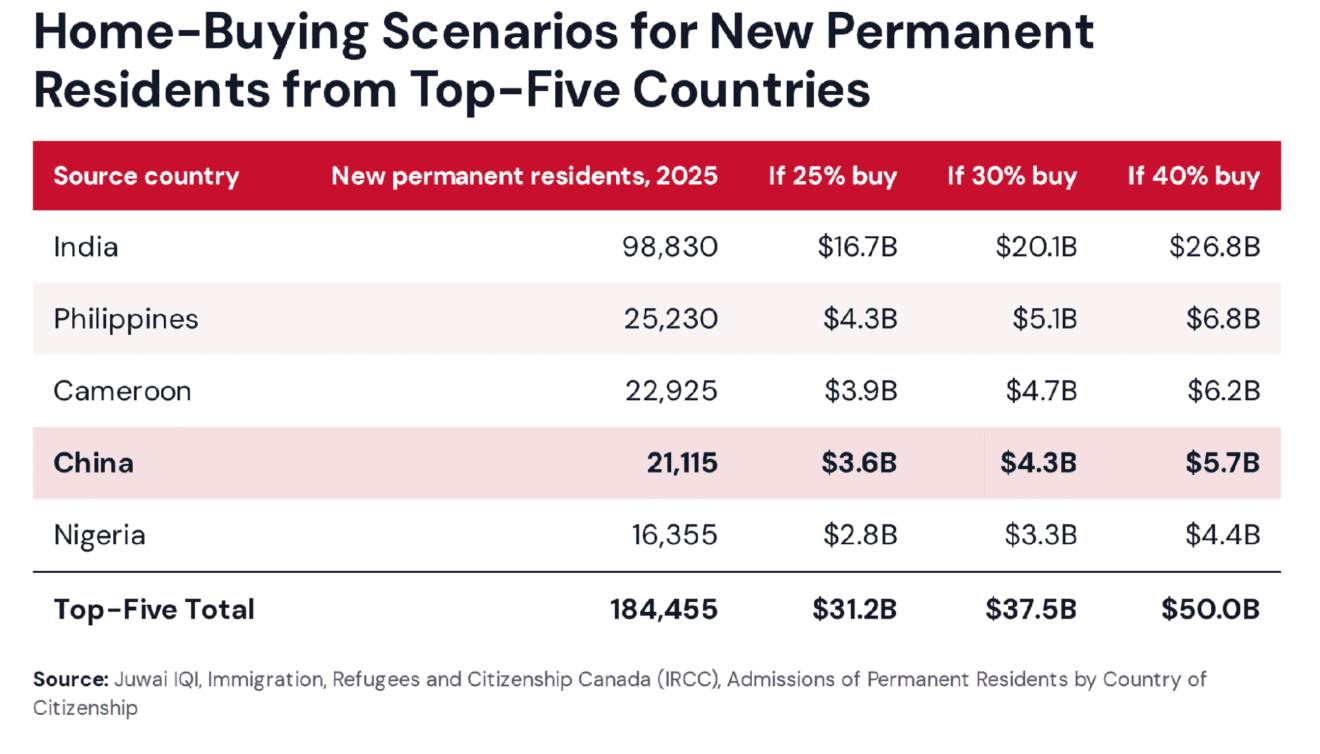
A recent opinion column published in Real Estate Magazine estimates that new permanent residents (PRs) could account for as much as $50 billion in residential home purchases each year, based on different purchasing scenarios. While this figure is an estimate rather than an official government statistic, it highlights the significant role newcomers continue to play in Canada’s housing market.
So what does this mean for buyers, sellers, and investors in the Greater Toronto Area?
Let’s take a closer look.
Why Permanent Residents Matter More Than Foreign Buyers
Canada’s foreign buyer restrictions have changed the conversation around international real estate.
Many people assume foreign demand has disappeared because of the federal foreign buyer ban. However, the reality is more nuanced.
Once someone becomes a Canadian Permanent Resident, they are generally eligible to purchase residential property like any other Canadian resident. That means thousands of newcomers each year enter the housing market not as foreign buyers, but as future homeowners looking to establish their lives in Canada.
For many newcomers, buying a home is one of the biggest milestones after obtaining permanent residency.
A Growing Source of Housing Demand
According to Immigration, Refugees and Citizenship Canada (IRCC), Canada welcomed hundreds of thousands of new permanent residents in recent years.
The REM article estimates that if only a portion of these newcomers purchase homes at approximately Canada’s average home price, annual housing demand could represent between approximately $31 billion and $50 billion depending on homeownership rates. The figures are scenario-based estimates rather than measured transaction data.
Whether the final number is closer to the lower or upper estimate, one conclusion remains clear:
New Canadians represent an important source of long-term housing demand.
The GTA Continues to Be a Top Destination
The Greater Toronto Area remains one of Canada’s most popular destinations for newcomers.
Many permanent residents choose communities such as:
- Toronto
- Markham
- Richmond Hill
- Vaughan
- Mississauga
- Scarborough
- North York
These cities offer:
- Employment opportunities
- Established cultural communities
- Public transportation
- Universities and colleges
- Strong healthcare systems
- Diverse neighbourhoods
As newcomers settle, housing often becomes their next priority after employment and establishing financial stability.
Not Everyone Buys Immediately
It’s important to recognize that not every permanent resident purchases a home right away.
Many newcomers:
- Rent during their first few years
- Build Canadian credit history
- Save for a larger down payment
- Learn about different neighbourhoods
- Wait until family members arrive
- Secure stable employment
Others may purchase shortly after arriving if they already have sufficient savings or are relocating with established financial resources.
This means immigration supports housing demand over many years—not just during the year someone lands in Canada.
What This Means for Buyers
For buyers, the report reinforces one important point:
Demand for housing isn’t disappearing.
Although market conditions fluctuate because of interest rates and economic uncertainty, Canada’s population continues to grow.
That doesn’t necessarily mean prices will immediately increase.
Home prices are influenced by many factors, including:
- Interest rates
- Housing supply
- Employment
- Consumer confidence
- Government policy
- Local inventory
However, steady population growth provides ongoing support for long-term housing demand.
For buyers planning to own a home for many years, focusing on affordability, lifestyle, and long-term financial goals may be more important than trying to perfectly time the market.
What This Means for Sellers
For homeowners considering selling, immigration helps maintain a continuous pipeline of potential buyers.
Many newcomers eventually transition from renting to ownership.
Properties that tend to appeal to first-time buyers—including condominiums, townhomes, and entry-level detached homes—may continue attracting interest as more permanent residents establish themselves financially.
Of course, sellers should still price according to current market conditions rather than relying solely on future demand.
What About Investors?
Population growth also affects the rental market.
Many new permanent residents rent before purchasing a home.
This supports demand for rental housing across many GTA communities.
For investors, important considerations remain:
- Local rental demand
- Cash flow
- Vacancy rates
- Property management
- Long-term appreciation
- Financing costs
Successful investing continues to depend on careful analysis rather than assuming population growth alone guarantees returns.
Canada’s Housing Market Is More Than One Number
The “$50 billion” estimate has generated attention, but it’s important to understand its context.
The article’s author clearly explains that there is no official government database tracking how many new permanent residents purchase homes or how much they spend. Instead, the estimate is based on several scenarios using immigration data and average home prices.
That means the exact dollar amount should be viewed as an illustration of potential market impact—not a confirmed measurement.
The broader takeaway is that immigration continues to be an important driver of housing demand, even while foreign buyer restrictions remain in place.
Why This Matters for the GTA
The GTA has always been one of Canada’s most dynamic housing markets.
Despite changing market cycles, the region continues to benefit from:
- Strong job creation
- Population growth
- International immigration
- Diverse communities
- World-class education
- Ongoing infrastructure investment
These long-term fundamentals continue to make the GTA an attractive place to live, work, and invest.
JDL Realty’s Perspective
Real estate markets are influenced by many moving parts, and immigration is only one of them.
While headlines often focus on interest rates or short-term price changes, long-term population growth continues to support housing demand across the Greater Toronto Area.
For buyers, sellers, and investors alike, understanding these broader demographic trends can help put today’s market into perspective and support more informed real estate decisions.
Final Thoughts
The recent estimate that new permanent residents could contribute up to $50 billion in annual home purchases serves as a reminder that Canada’s housing market is closely connected to population growth. While the exact number is based on projections rather than official transaction data, the underlying trend is clear: newcomers will continue to play an important role in shaping housing demand across Canada.
Rather than focusing solely on short-term market fluctuations, buyers and sellers should also consider the long-term fundamentals that continue to influence the GTA real estate market.

Your Industry Experts
We’re here to help. Whether you’re an agent or a client, we have the support and expertise you need to thrive in your next endeavour.