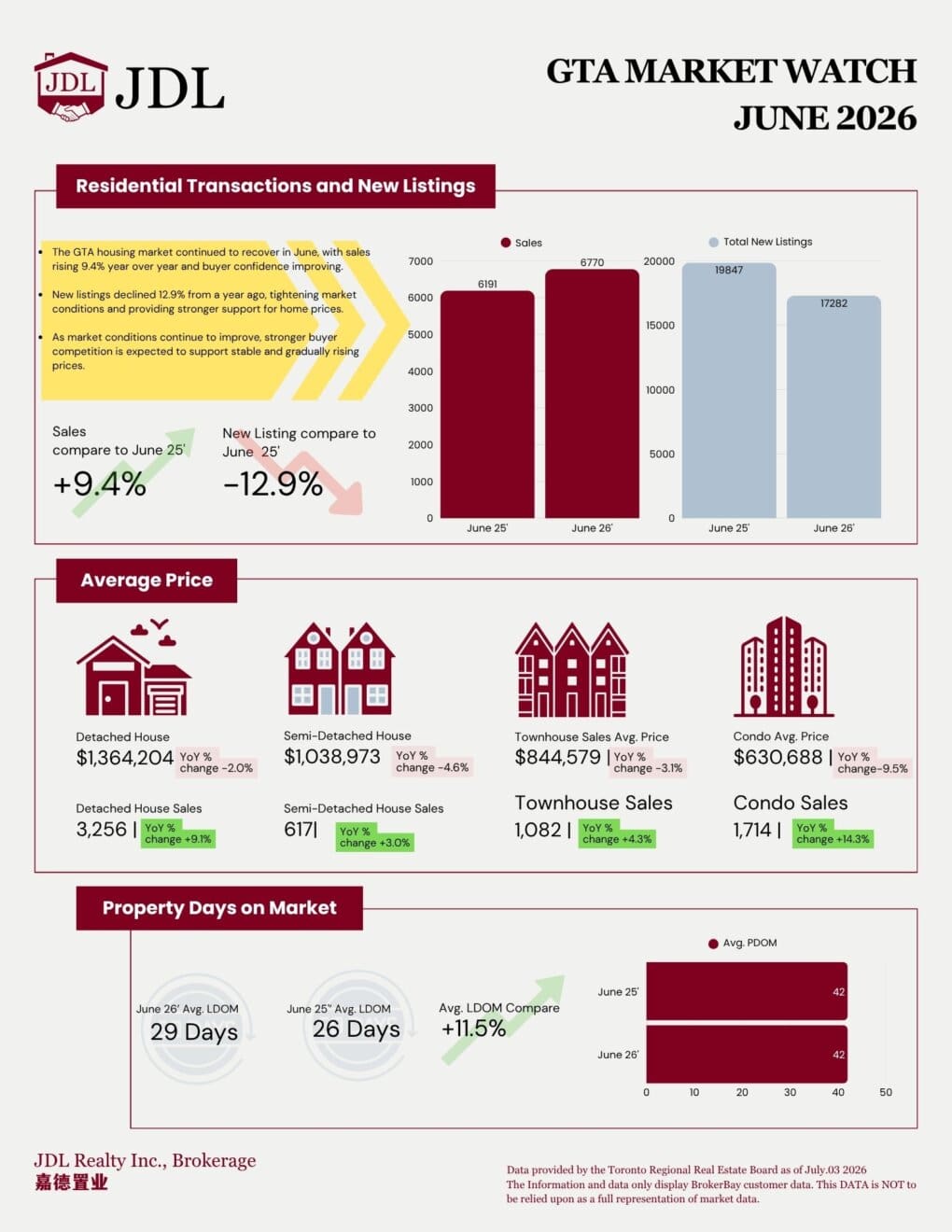




For much of the past two years, buyers across the Greater Toronto Area have been sitting on the sidelines.
Higher interest rates, affordability concerns, and economic uncertainty caused many potential homebuyers to delay their decisions. New home sales slowed dramatically, and both builders and buyers adopted a wait-and-see approach.
But recent data suggests something interesting is happening.
The market isn’t recovering evenly.
While the condominium sector continues to face challenges, low-rise homes—including detached houses, semi-detached homes, and townhomes—are beginning to show signs of renewed momentum.
In other words, the GTA market is increasingly becoming a tale of two different markets.
HST Rebate Helped Bring Buyers Back
According to the Building Industry and Land Development Association (BILD), Ontario’s enhanced HST rebate program has had an immediate impact on the new home market.
Low-rise new home sales in April surpassed the 10-year average for the first time in three years, showing that buyer demand remains strong when affordability improves. Meanwhile, overall new home sales are still below historical averages, and the condominium sector continues to lag behind.
The rebate program has effectively reduced purchasing costs for many buyers and encouraged some families to move forward with plans they had postponed.
The result?
Demand is returning—but not equally across all housing types.
Why Buyers Are Returning to Townhomes and Detached Homes
Today’s buyers are prioritizing lifestyle, space, and long-term value.
Since the pandemic, housing preferences have shifted significantly.
More families are searching for:
- Larger living spaces
- Home offices and flexible layouts
- Private backyards
- Additional bedrooms
- Multi-generational living options
- Family-oriented communities
As a result, many buyers are focusing on townhomes and detached homes instead of smaller condominium units.
The HST rebate has made these properties more attractive, helping some buyers who were previously priced out re-enter the market.
Why Is the Condo Market Still Struggling?
The condominium market faces a different set of challenges.
Several factors continue to weigh on demand:
Investor Activity Has Slowed
Many investors are taking a cautious approach due to softer rents and slower price appreciation.
Higher Carrying Costs
Mortgage payments, property taxes, insurance, and maintenance fees have increased substantially over the past few years.
Affordability Concerns
Even though condo prices have moderated, monthly carrying costs remain high for many first-time buyers.
Uncertainty About Future Prices
Some buyers are still waiting for lower interest rates or further price declines before entering the market.
As a result, condominium sales have remained significantly below historical averages. In April, condo apartment sales were nearly 88% below the 10-year average, according to BILD and Altus Group.
Does This Create Opportunities?
Ironically, slower markets often create better opportunities.
Compared to the highly competitive market of 2021, today’s buyers benefit from:
- More inventory to choose from
- Less competition
- Greater negotiating power
- Flexible deposit structures
- Attractive builder incentives
- More time to compare options
Instead of rushing into multiple-offer situations, buyers can make decisions more carefully and strategically.
For many end users, this may be one of the most favorable environments seen in years.
Different Opportunities for Different Buyers
First-Time Buyers
Condominiums may offer more value and less competition than in previous years.
With more inventory available, buyers can take their time and negotiate better terms.
Growing Families
Townhomes and detached homes are becoming increasingly attractive thanks to improved affordability and government incentives.
Many families are prioritizing space and long-term livability.
Move-Up Buyers
Those already owning property may find this environment ideal for upgrading while maintaining stronger negotiating power.
Long-Term Investors
Periods of uncertainty often create opportunities to acquire quality assets before broader market sentiment improves.
The Market Often Moves Before Headlines Do
One of the biggest mistakes buyers make is waiting for complete certainty.
Historically, markets begin recovering long before headlines turn optimistic.
By the time confidence fully returns, competition often increases and opportunities become harder to find.
While no one can perfectly predict the market bottom, long-term wealth is rarely built by timing the market perfectly.
It is built by purchasing the right property, at the right time, with a long-term perspective.
JDL Realty | Helping Buyers Navigate Every Market Cycle
At JDL Realty, we believe real estate decisions should never be based solely on headlines.
Whether you are:
- Buying your first home
- Moving up to a larger property
- Purchasing a pre-construction home
- Building long-term wealth through real estate
Our team provides:
- Market trend analysis
- Community insights
- New home and pre-construction opportunities
- Builder comparisons
- Customized buying strategies
- Long-term planning and guidance
Because successful real estate decisions aren’t about predicting every market movement.
They’re about aligning your home purchase with your life goals.
Final Thoughts
The GTA market isn’t moving in one direction.
Low-rise homes are showing renewed strength, while the condo sector continues to face challenges.
But that’s exactly what creates opportunities.
In today’s market, buyers have more choices, greater negotiating power, and more time to make informed decisions.
And while nobody knows exactly when the next cycle will begin, history has shown that opportunities often appear when uncertainty is still present.
Source: CP24

Your Industry Experts
We’re here to help. Whether you’re an agent or a client, we have the support and expertise you need to thrive in your next endeavour.